
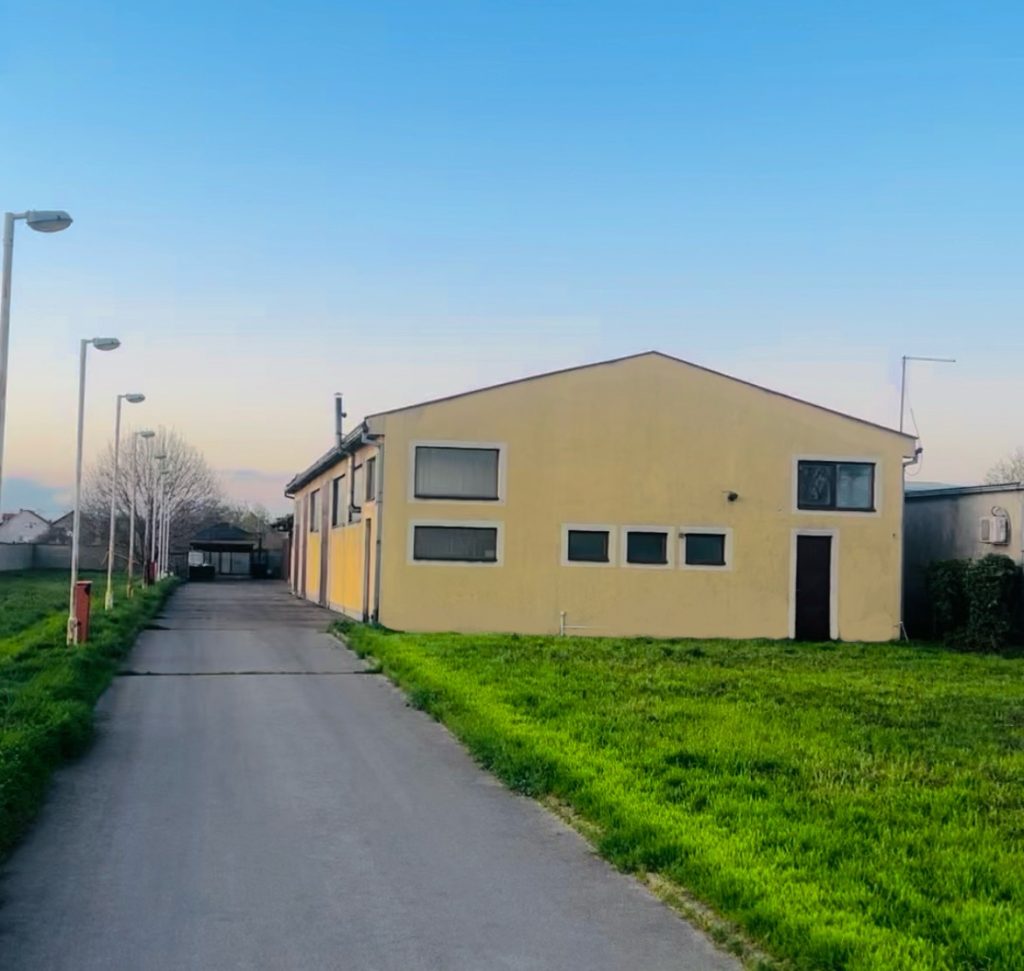
Our production range includes mixers for black and colored compounds, extrusion lines, and vulcanization presses with molds, enabling a wide variety of delivery forms.
Thanks to our production facility, we are able to manufacture high-quality compounds — from small quantities to large deliveries. Depending on the specific requirements and application standards of our clients, we offer specialized finishing technologies and diverse delivery formats.
The most common packaging/delivery forms are calendared rolls and sheets, followed by wigwag slabs. We also provide customized delivery shapes such as strips for automatic feeders, filtered rolled sheets, silicone profiles, and many other forms tailored to the needs and processes of our clients. These formats are suitable for various processing methods, including compression molding (CM), transfer molding (TM), and injection molding (IM).
We specialize in creating custom compounds that not only meet strict industrial standards but also effectively address your specific operational needs. Whether it’s high-temperature resistance or elasticity under pressure, our compounds are precisely and reliably designed.
A total of 1,000 m² production hall, with the possibility of expansion.
Truck access is provided.
Main roller for black compound: 1500 x 550 mm
Small roller for black compound samples: 500 x 250 mm
Roller for colored and white compounds: 1000 x 400 mm
Small roller for colored and white compound samples: 500 x 250 mm
Extruders:
Screw diameters: 90 mm, 63 mm, and 30 mm
Presses:
5 presses of varying power and sizes, allowing great versatility:
from 7 tons to 250 tons of force, and from R200 mm up to 1200 x 1000 mm in dimensions.
Rubber sheets are flat, uniformly extruded or rolled rubber products available in various thicknesses, widths, and lengths. They are used in a wide range of industrial applications.
Molded rubber refers to rubber products shaped into specific forms using molds. This process allows the production of parts with high precision, complex geometries, and excellent performance, tailored to meet the users' requirements.
Extruded rubber is produced by forcing the rubber compound through a die to create a continuous profile with a defined cross-section. Spliced rubber refers to processes where the ends of extruded rubber profiles are mechanically or chemically joined to form a closed ring, frame, or specific geometry.
Custom rubber formulations involve developing specific compounds tailored to the unique requirements of a client or particular application. Instead of using standard materials, this process carefully selects raw materials and additives to achieve the desired mechanical, chemical, and thermal properties.
Internal mixing means that the entire process of preparing and producing rubber compounds is carried out completely within the company’s own production facility, without relying on external suppliers. This allows full control over the quality, composition, and properties of the final material.
Product design in the rubber industry represents a crucial step in developing functional and reliable components that meet technical, aesthetic, and user requirements. This process combines engineering expertise, material selection, and molding techniques to achieve an optimal product for a specific application.
In addition to precise and carefully executed compounding, the form in which the rubber is delivered also plays a significant role in the efficient production of finished parts. Various delivery forms are available, such as slabs, calendered sheets (plates), and strips for automatic feeding in different dimensions.
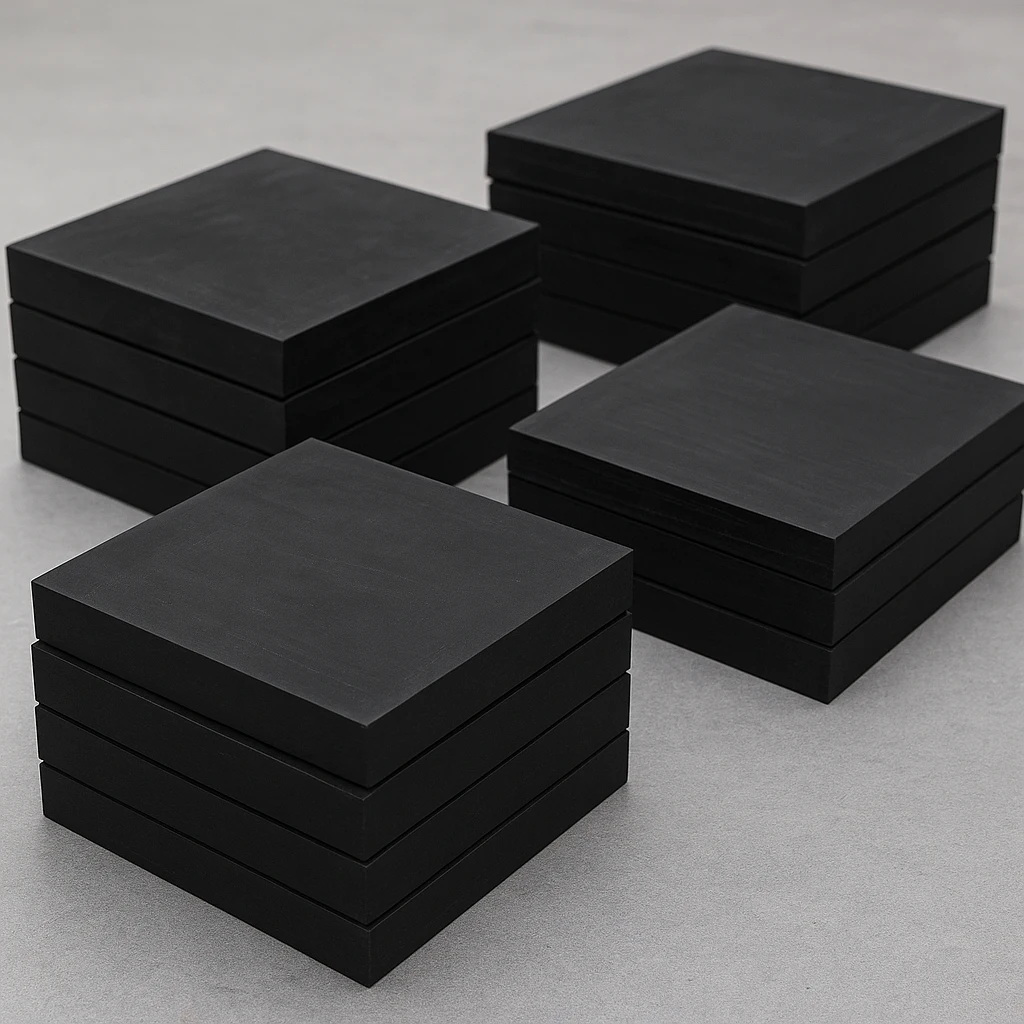
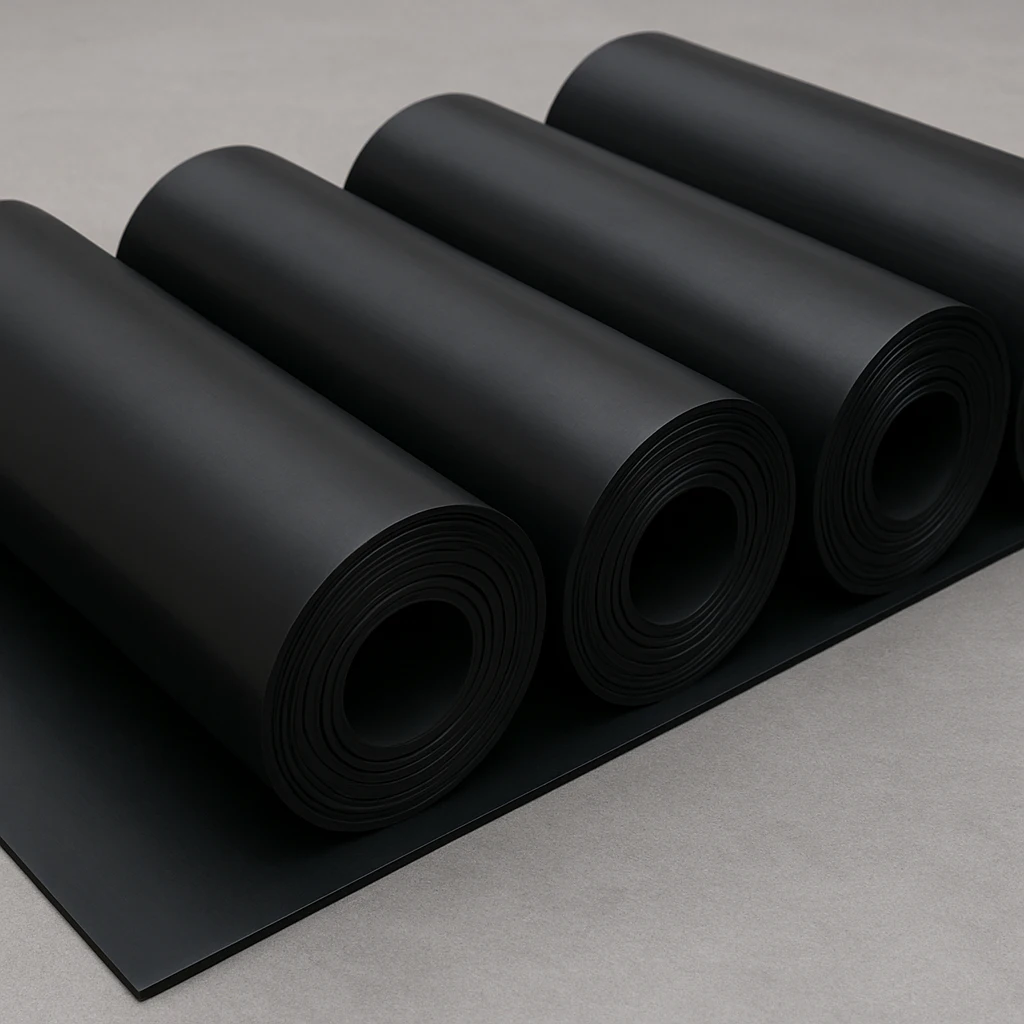
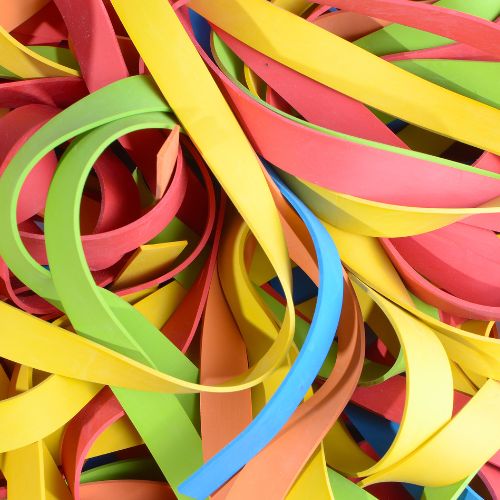

Technologically tested raw rubber compounds and vulcanized rubber products.
A tradition of quality since 1989 – expertise in rubber compound preparation, molding, and extrusion.
We develop solutions tailored to your specifications and industry standards.
Latest news and offers